The best blind wine tasting app is the one that protects the blind part, then makes the reveal worth waiting for. Sommo is best for independent group ratings that become personal records, TasteWine for a traditional club competition, Vine Savant for a game night and Blind for solo practice.
Full disclosure: I build Sommo. This comparison uses each product’s published format and judges four practical questions: can guests join quickly, are opinions hidden, is the reveal useful, and does anything valuable survive after the event?
The Four Picks at a Glance
| App | Best for | What guests do | Reveal style |
|---|---|---|---|
| Sommo | Private group tasting | Rate, tag and write independently | Shared verdicts, then personal journal saves |
| TasteWine | Wine-club competition | Score and guess structured fields | Results and leaderboard |
| Vine Savant | Social guessing game | Answer custom questions | Bottle reveal and player rankings |
| Blind | Solo palate practice | Work through seven questions | Guided feedback on the bottle |
1. Sommo: Best for Honest Group Ratings
Sommo’s Sharing Party fixes the most common blind-tasting failure: one confident voice names a grape or praises a bottle, and everyone else’s score starts drifting.
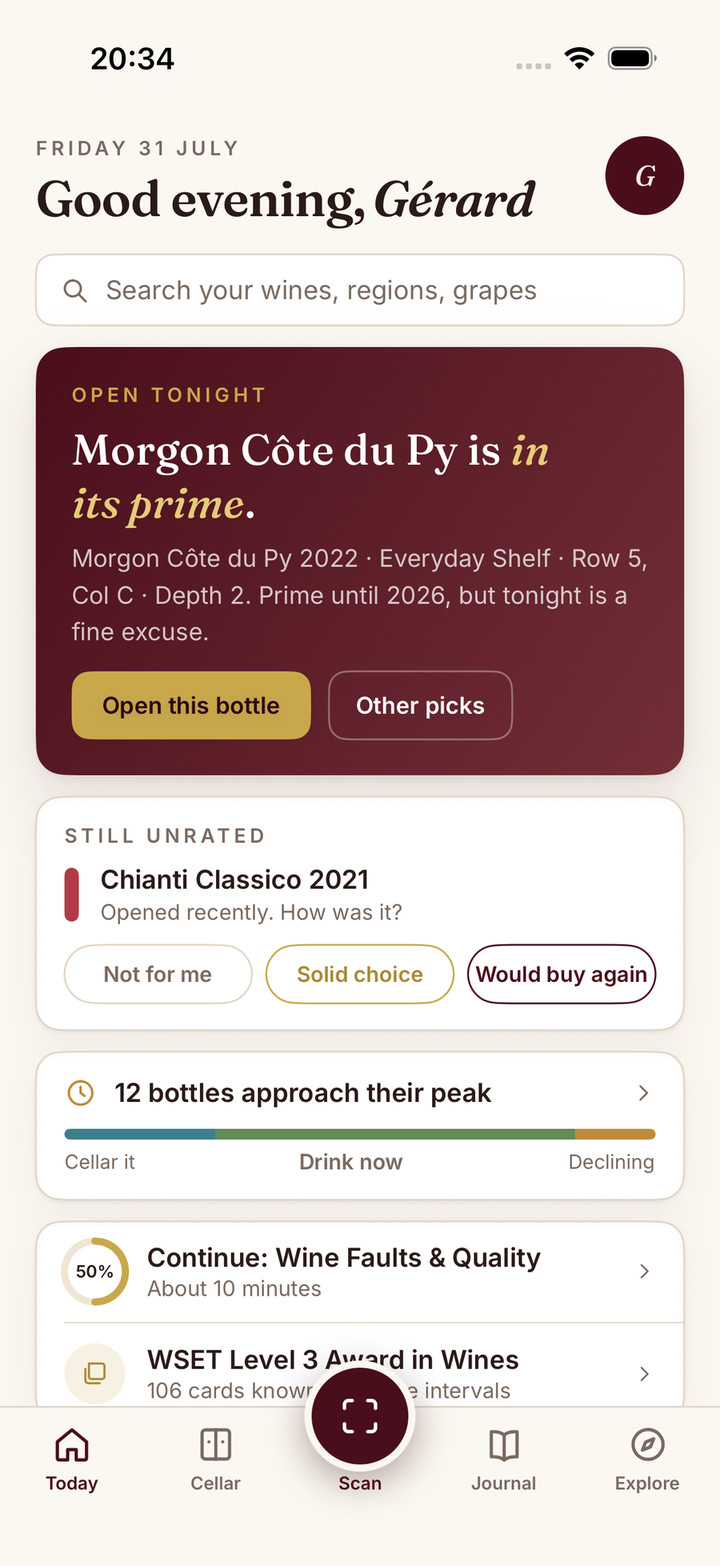
The host adds the flight and shares a code or link. Guests submit a verdict, note and flavour tags on their own phones. Nobody sees the room’s answers until the host reveals them. That makes a casual score useful without forcing beginners through a professional grid.
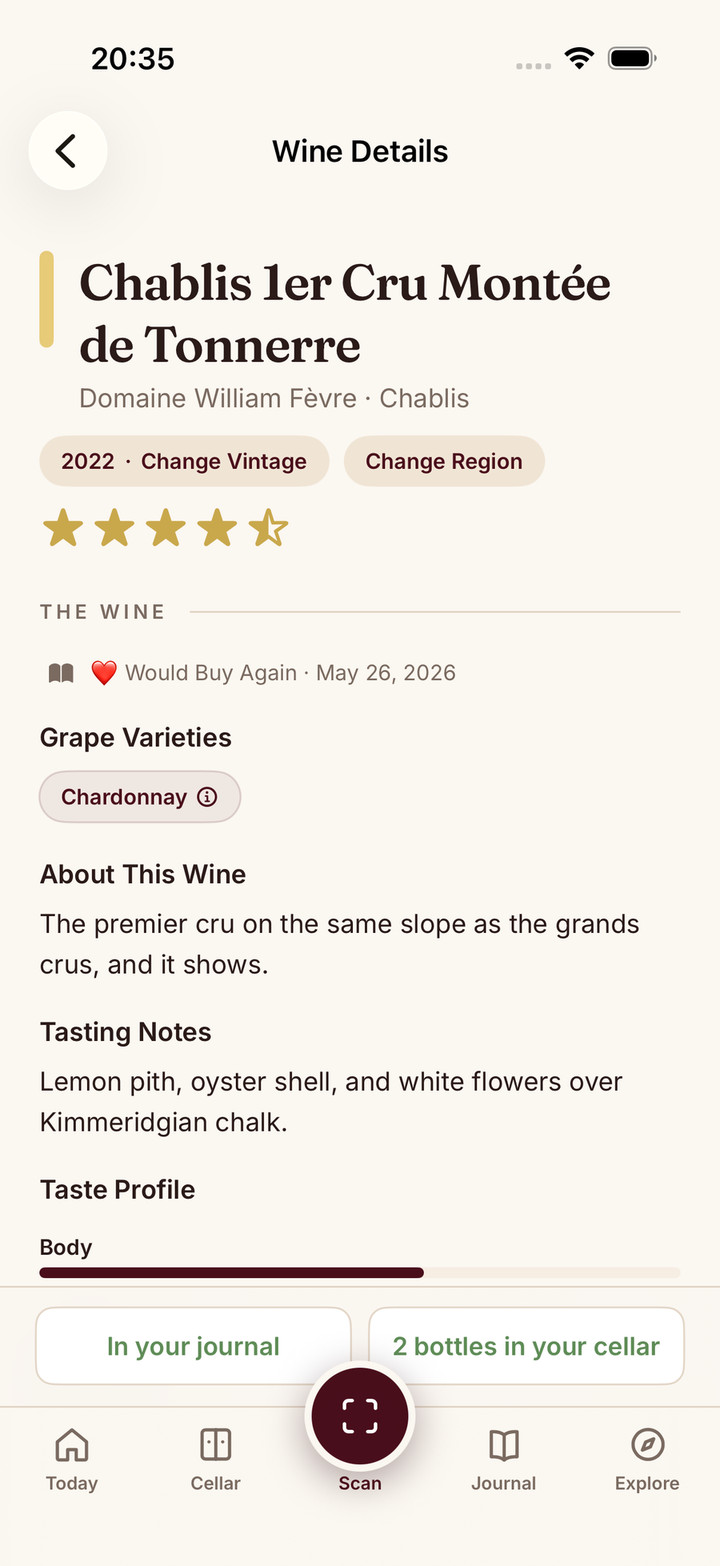
The important difference comes after the reveal. Every guest can save their own ratings into their own journal. The bottle can then contribute to personal insights and Taste DNA rather than disappearing into one group average. Sommo is the best fit when the same app also needs to scan labels, manage a cellar and help the group choose a future bottle.
2. TasteWine: Best for a Traditional Wine Club
TasteWine is purpose-built for hosted blind and open tastings. Guests can score wines and guess details such as grape, country, region, year and price. A live leaderboard makes the result competitive, while club history gives a recurring group continuity.
Choose it when structured guessing is the main event and the club wants a record of previous meetings. Choose Sommo when each member’s private wine life after the event matters as much as the group score.
3. Vine Savant: Best for a Party Game
Vine Savant treats blind tasting as a social game. The host can customise questions, guests join in a browser, and the final bottle reveal comes with a leaderboard. Its modes range from relaxed self-paced play to a more educational step-by-step format.
That makes it the strongest pick for a mixed-experience group that wants energy and competition. It is a game first, while Sommo is a connected wine record first.
4. Blind: Best for Solo Practice
Blind guides one taster through seven questions using any unknown bottle. It is the outlier here because it does not need a host or a room full of phones.
Use it when you want a repeatable individual exercise. For an evening built around friends, invitations and a shared reveal, choose one of the first three.
A Simple Format That Works
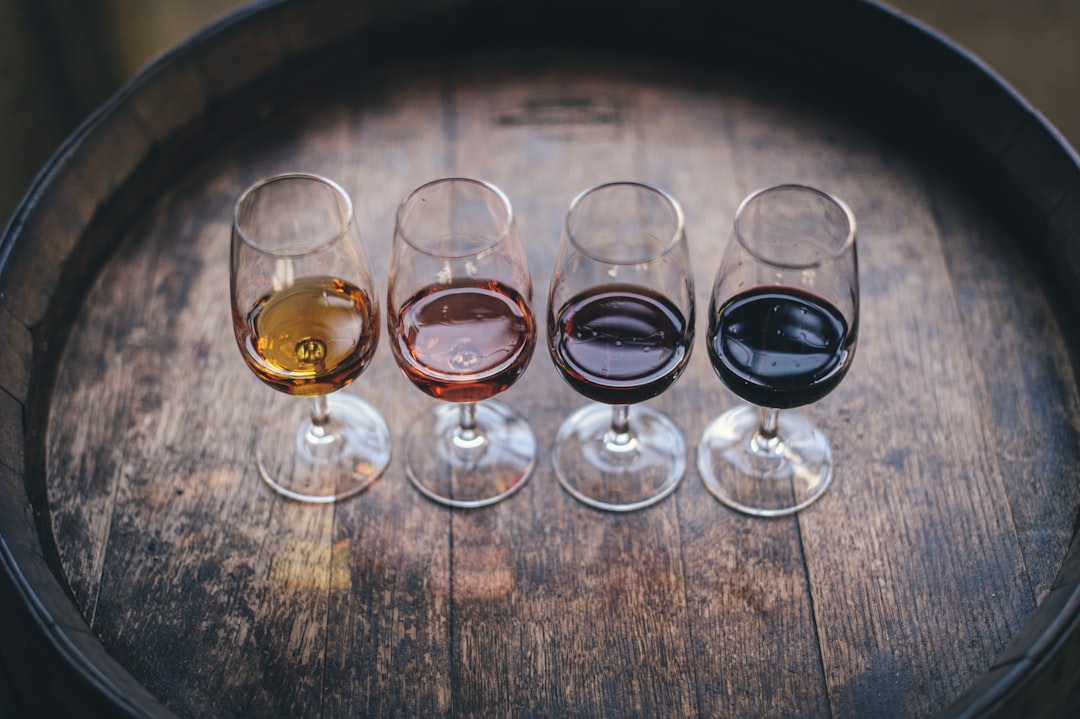
Pour four to six wines, hide the bottles and number the glasses. Give everyone water and the same scoring rule. Lock answers before conversation, reveal one wine at a time, then save the personal notes before clearing the table.
The broader wine apps for friends guide compares social models beyond blind tasting. The wine flight guide helps with order and comparison, while Wine Tasting Mode covers fast flight-card capture for a non-blind tasting.
Sommo keeps the room honest and the result useful. Try Sommo free before your next tasting and let every palate speak before the reveal.
What kind of blind tasting are you running?