Best AI Apps for Food and Drink in 2026
From wine scanning to calorie counting, discover the best AI-powered food and drink apps that are transforming how we eat, drink, and learn about what we consume.
Point your phone at a glass of wine and know exactly what you’re drinking. Snap a photo of your lunch and get an instant calorie breakdown. Ask your phone what to cook with whatever’s left in the fridge. A few years ago, this sounded like science fiction. Today, it’s just Tuesday.
AI is quietly reshaping our relationship with food and drink. Not through gimmicks, but through genuinely useful tools that make us more informed, more adventurous, and healthier. Here are the best AI-powered apps doing exactly that.
Sommo — Your AI Wine Companion
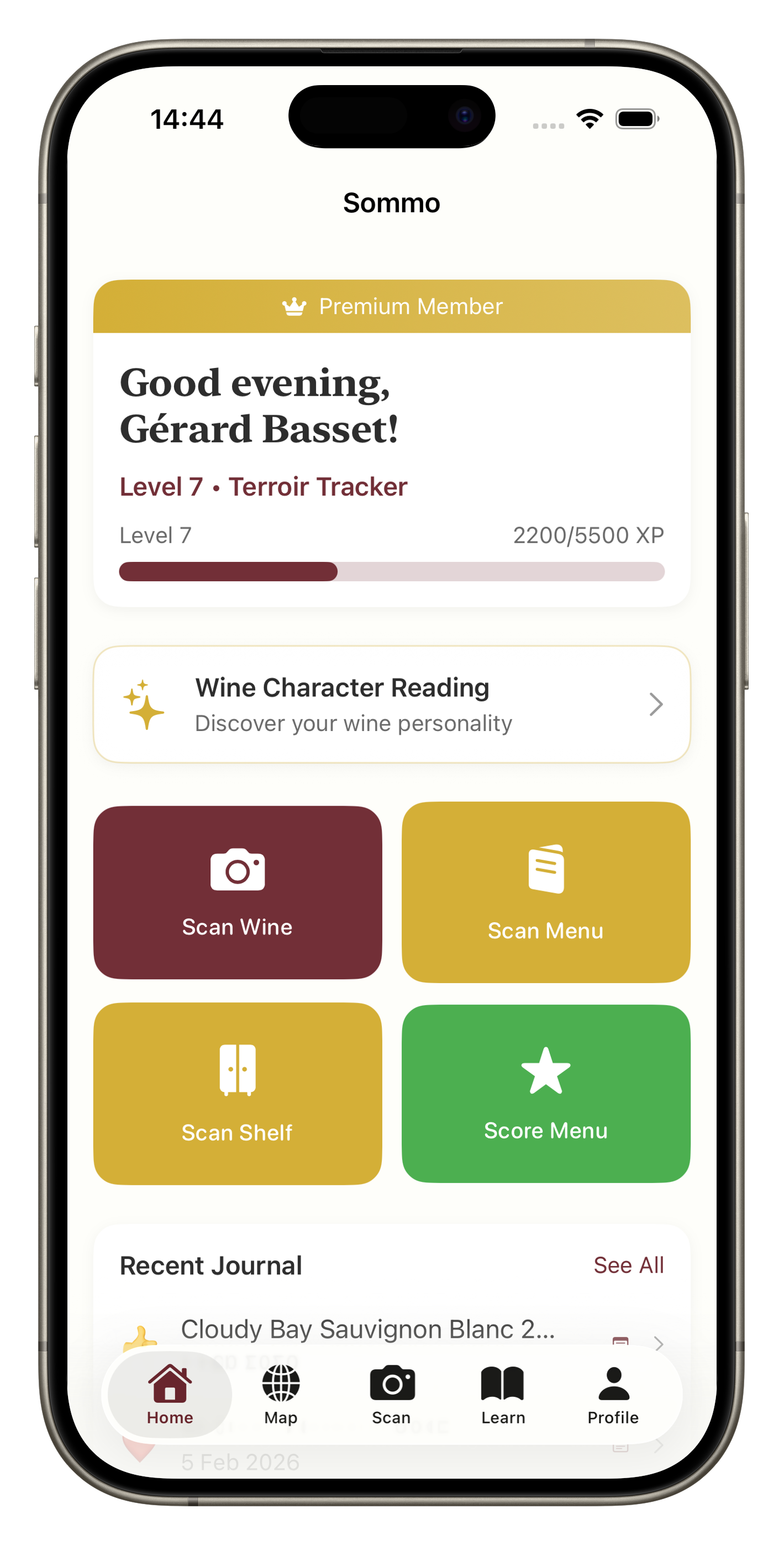
Let’s start with what we know best. Sommo uses AI to turn your phone into a personal sommelier. Scan any wine label and get instant insights: grape varieties, tasting notes, region information, and food pairing suggestions. But Sommo goes far beyond simple label recognition.
What makes it different is the learning layer. Sommo combines AI scanning with structured wine education, including WSET exam prep with spaced repetition flashcards, a Systematic Approach to Tasting (SAT) framework for building tasting notes, and an interactive wine region map. It even analyses your journal entries to build a personalised wine character profile, helping you understand your own palate over time.
The restaurant menu scoring feature is particularly clever. Snap a photo of a wine list and Sommo scores each option, telling you which bottles offer the best value and which ones match your taste preferences.
Best for: Anyone who wants to learn about wine, not just identify it.
MyFitnessPal — The Calorie Counting Pioneer
MyFitnessPal has been around for years, but its AI capabilities have matured significantly. The app now uses machine learning to recognise foods from photos, suggest portion sizes, and predict your nutritional intake patterns. Its barcode scanner covers millions of products, making logging meals almost effortless.
The AI-powered meal suggestions learn from your eating habits and nutritional goals, offering recommendations that actually fit your lifestyle rather than generic diet plans.
Best for: People tracking macros and calories with minimal friction.
Yummly — AI-Powered Recipe Discovery
Yummly analyses your taste preferences, dietary restrictions, and cooking skill level to recommend recipes you’ll genuinely enjoy. Its visual recognition feature lets you snap a photo of ingredients and get recipe suggestions based on what you have available.
The app learns over time. The more you cook and rate recipes, the better its recommendations become. It also integrates with smart kitchen devices to guide you through cooking steps.
Best for: Home cooks looking for personalised recipe inspiration.
FoodVisor — Nutrition Analysis by Photo
FoodVisor takes the concept of food logging and strips away the tedious manual entry. Point your camera at a plate of food and the AI identifies individual items, estimates portions, and calculates nutritional values in seconds. It recognises complex dishes, mixed plates, and even restaurant meals.
The app provides detailed breakdowns of macronutrients, micronutrients, and glycaemic load, making it particularly useful for people managing specific health conditions or fitness goals.
Best for: Visual food logging without the hassle of searching databases.
Noom — Behavioural Science Meets AI
Noom takes a psychology-first approach to healthy eating. Rather than just counting calories, it uses AI to understand your behavioural patterns around food and provides personalised coaching. The app categorises foods with a colour system (green, yellow, red) and adapts its guidance based on your progress and setbacks.
What sets Noom apart is its focus on why you eat, not just what you eat. The AI coach helps identify triggers and build sustainable habits rather than enforcing rigid meal plans.
Best for: People who want lasting behavioural change around food, not just short-term dieting.
Paprika — Smart Recipe Management
Paprika uses AI to automatically extract recipes from any website, stripping away the life stories and advertisements to give you clean, organised instructions. It builds grocery lists from your meal plans, scales ingredients for different serving sizes, and syncs across all your devices.
The pantry tracking feature helps reduce food waste by suggesting recipes based on ingredients you already have before they expire.
Best for: Organised home cooks who collect recipes from across the web.
Lose It! — AI Food Recognition
Lose It! has built one of the most accurate food recognition engines available. Its Snap It feature identifies foods, estimates portions, and logs meals from a single photo. The AI continues improving through community feedback, making it increasingly accurate with regional and cultural dishes.
The app also connects with wearables and smart scales to build a comprehensive picture of your health, using AI to correlate your eating patterns with activity levels and weight trends.
Best for: Quick and accurate photo-based food logging.
The Bigger Picture
What’s remarkable about this wave of AI food and drink apps isn’t any single feature. It’s the shift in how we relate to what we consume. Knowledge that once required years of study, whether that’s understanding wine or reading nutritional labels, is now accessible in seconds through a phone camera.
These apps share a common thread: they reduce the gap between curiosity and understanding. You don’t need to memorise calorie tables or wine appellations. You just need to be curious enough to point your phone and ask.
The best AI doesn’t replace expertise. It makes expertise accessible. Whether you’re scanning a wine label with Sommo, logging a meal with FoodVisor, or planning dinner with Yummly, these tools meet you where you are and help you make more informed choices, one scan at a time.