Beaujolais might be the most misunderstood wine region in France. For decades, the name was synonymous with Beaujolais Nouveau: a light, fruity, intentionally simple wine released every third Thursday of November. The marketing was brilliant. The parties were fun. But the long-term damage was real. An entire generation of wine drinkers came to believe that Beaujolais was a novelty, a wine to drink once a year and then forget about.
The reality is that Beaujolais produces some of the most compelling, terroir-driven, age-worthy reds in France, often at prices that make neighbouring Burgundy look absurd. If you have written off this region, it is time to reconsider.
Where Is Beaujolais?
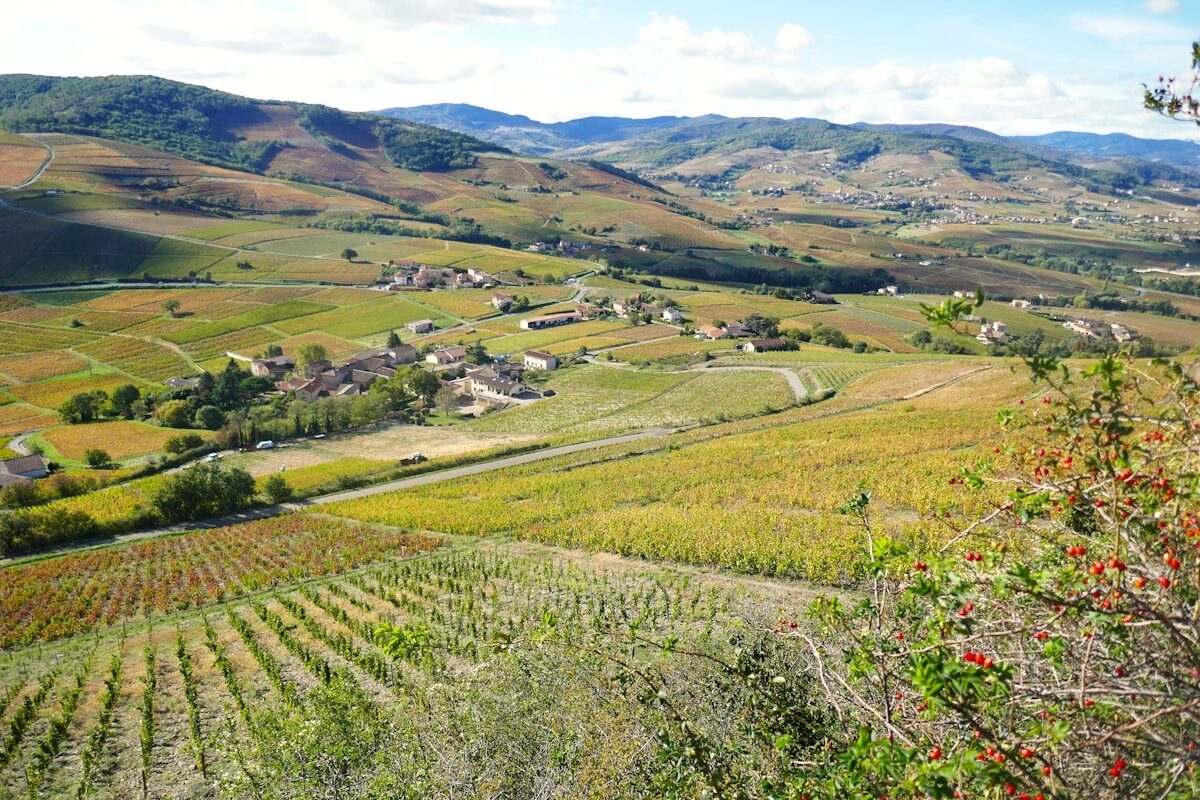
Beaujolais sits at the southern end of greater Burgundy, stretching from just south of Mâcon down to the northern outskirts of Lyon. Administratively, it falls within the Burgundy wine region, but geologically and stylistically, it is its own world.
The northern half of the region, where all ten Crus are located, is defined by granite and schist soils. These ancient, poor soils force vines to dig deep, producing wines with concentration, mineral complexity, and a sense of place that can be genuinely profound. The southern half sits on clay and limestone, producing the lighter, fruitier wines that make up the Beaujolais and Beaujolais-Villages appellations.
The climate is continental with some Mediterranean influence creeping up from the Rhône valley to the south. Summers are warm, autumns are long, and the best vineyard sites face east and south on rolling granite hills.
The Gamay Grape
Beaujolais is essentially a one-grape region. Gamay (formally Gamay Noir à Jus Blanc) is the grape behind virtually every red wine here. It was famously banned from Burgundy proper in 1395 by Philip the Bold, Duke of Burgundy, who declared it a “very bad and disloyal plant.” He wanted Pinot Noir to reign, and Gamay was exiled south. Beaujolais became its home, and the match turned out to be a perfect one.
Gamay on granite produces wines with bright acidity, red fruit character (cherry, raspberry, redcurrant), a distinctive floral lift, and, in the best examples, a silky, mineral-driven structure that genuinely recalls good Burgundy. It is a thin-skinned grape, which means light to medium colour and relatively low tannins, but this should not be confused with simplicity. The best Gamay wines have extraordinary depth and finesse.
Carbonic Maceration: The Technique That Defines the Style
Most Beaujolais is made using some form of carbonic or semi-carbonic maceration. In traditional winemaking, grapes are crushed and yeast ferments the juice. In carbonic maceration, whole, uncrushed bunches of grapes are placed in a sealed vat filled with carbon dioxide. Fermentation begins inside each individual berry, producing wines with vivid fruit, low tannins, and a characteristic juicy quality.
Full carbonic maceration produces the lightest, most fruit-forward styles (think Nouveau). Semi-carbonic maceration, where the weight of the grapes naturally crushes those at the bottom while the top bunches ferment whole, is more common in the Cru wines and produces a more structured result.
Many top producers in the Crus have moved towards more traditional Burgundian winemaking: destemming, cold soaking, longer maceration, and ageing in oak barrels. This shift has produced wines that challenge the old stereotypes entirely.
The Nouveau Problem
Beaujolais Nouveau was, for a time, one of the great marketing successes in wine history. The idea was simple: release a young, fresh, cheerful wine just weeks after harvest, turn it into a global event, and move enormous volumes. By the 1980s and 1990s, Nouveau accounted for a staggering share of total Beaujolais production.
The problem was twofold. First, much of the Nouveau was mediocre: mass-produced wine rushed to market with the help of heavy-handed carbonic maceration, producing banana and bubblegum flavours that bore little resemblance to serious wine. Second, and more damaging, the entire region became associated with this one product. Wine drinkers who tried Nouveau, found it simplistic, and concluded that Beaujolais had nothing more to offer missed some of the finest values in French wine.
The Nouveau phenomenon has faded considerably, and that has been healthy for the region. Today, the serious wines of the Cru appellations are finally getting the attention they deserve, championed by sommeliers, natural wine enthusiasts, and Burgundy lovers looking for quality without the Burgundy price tag.
The Quality Pyramid
Beaujolais operates on a clear three-tier hierarchy, with the Cru wines at the top.
Beaujolais AC
The entry level. These wines come from vineyards across the broader region, primarily from the flatter, clay-and-limestone soils of the south. They are light, fruity, meant to be drunk young, and best served slightly chilled. Think of them as everyday drinking wines: uncomplicated, refreshing, and affordable. This tier includes Beaujolais Nouveau.
Beaujolais-Villages
A step up. Beaujolais-Villages wines come from 38 designated communes in the northern half of the region, where soils are generally better and yields are lower. These wines have more concentration, a touch more structure, and often represent excellent value. They are still approachable young but can reward a year or two of bottle age.
The Ten Crus
The pinnacle of Beaujolais. These ten villages have earned their own appellations based on distinctive terroir and consistently superior quality. Notably, the word “Beaujolais” does not appear on Cru labels: the wines are labelled simply with the village name. This is both a mark of prestige and, ironically, a source of confusion, since many consumers do not realise these are Beaujolais wines at all.
Here is each Cru, from north to south, with its defining character.
Moulin-à-Vent
The most powerful and age-worthy Cru, often called the “King of Beaujolais.” The name comes from a 15th-century windmill that still stands among the vineyards. Wines from Moulin-à-Vent are the deepest and most structured in the region, built on manganese-rich granite soils that give them a savoury, almost meaty complexity with age. Top examples can cellar for ten to fifteen years and, in blind tastings, are regularly mistaken for Burgundy. If you are sceptical about Beaujolais, start here.
Fleurie
Arguably the most elegant Cru. Fleurie lives up to its name with intensely floral, perfumed wines: iris, violet, rose petal layered over ripe red fruit. The tannins are fine, the texture is silky, and the overall impression is one of grace. Fleurie drinks beautifully young but the best bottles develop lovely complexity over five to eight years.
Morgon
The second most powerful Cru after Moulin-à-Vent, and the one that most directly challenges Burgundy comparisons. The best wines come from the Côte du Py, a steep hill of decomposed schist that produces concentrated, mineral-driven wines with dark cherry fruit and earthy depth. Morgon has its own verb in French: “morgonner,” describing the way the wines evolve from fruit-forward youth to something deeper, more savoury, and more Pinot-like with age. Serious Morgon from a good vintage can age for a decade or more.
Brouilly
The largest Cru by area, producing generous, round, fruit-driven wines that are among the most accessible in the region. Brouilly wines tend to be soft, juicy, and approachable, with red berry fruit and a gentle mineral finish. They are excellent for everyday drinking and pair effortlessly with charcuterie and casual meals.
Côte de Brouilly
Not to be confused with Brouilly, Côte de Brouilly comes from the steep slopes of Mont Brouilly, the volcanic hill that rises from the centre of the Brouilly appellation. The altitude and gradient produce wines with more concentration, more minerality, and more structure than their Brouilly neighbours. These are age-worthy wines that deserve more recognition than they currently receive.
Chénas
The smallest Cru by production. Chénas produces structured, slightly rustic wines with dark fruit, spice, and a hint of oak character (some producers here use barrel ageing). It shares geological similarities with neighbouring Moulin-à-Vent and can offer similar depth at a lower price. Chénas is a hidden gem for those willing to explore.
Juliénas
Named after Julius Caesar (allegedly), Juliénas produces firm, spicy wines with good acidity and red-to-dark fruit. The soils here are a mix of granite, schist, and ancient sedimentary rock, giving the wines a distinctive mineral edge. They drink well young but have enough structure to reward a few years in the cellar.
Chiroubles
The highest-altitude Cru, producing the lightest, most delicate wines in the hierarchy. Chiroubles is all about freshness: bright cherry fruit, floral aromatics, and a crisp, almost ethereal finish. These are wines for warm-weather drinking, best served lightly chilled. They do not age long, but that is not the point. Chiroubles is pure pleasure.
Régnié
The most recent addition to the Cru family (promoted in 1988), Régnié still struggles for recognition. The wines are medium-bodied with soft red fruit, gentle tannins, and an easy-going character. Régnié offers some of the best value in the Cru tier, precisely because it is overlooked. If you see a bottle from a good producer, buy it.
Saint-Amour
The northernmost Cru, and the one with the most romantic name. Saint-Amour produces medium-bodied, aromatic wines with red fruit, spice, and a characteristic freshness. The name makes it popular around Valentine’s Day, but it deserves attention year-round. Good Saint-Amour is charming, balanced, and versatile at the table.
Why Morgon Ages Like Burgundy
The comparison between aged Morgon and Burgundy is not hyperbole. Both wines are made from thin-skinned red grapes (Gamay and Pinot Noir share genetic heritage), both come from granite-influenced soils, and both develop similar savoury, earthy, mushroom-and-undergrowth complexity with bottle age.
The mechanism is partly chemical: the fermentation style increasingly used by top Morgon producers (longer maceration, traditional fermentation, oak ageing) extracts more tannin and phenolic compounds, giving the wines a structural backbone that supports ageing. And the Côte du Py’s decomposed schist soils produce grapes with a mineral concentration that becomes more pronounced over time.
At a fraction of Burgundy prices, aged Morgon from producers like Jean Foillard, Marcel Lapierre, or Domaine Jean-Marc Burgaud represents one of the great bargains in French wine.
Serving Temperature
This is where many people go wrong with Beaujolais. Serving it at the same temperature as a Bordeaux or Rhône red (around 18 degrees Celsius) flattens the fruit and emphasises any rough edges. Beaujolais should be served slightly chilled, ideally between 13 and 15 degrees Celsius for the Crus, and even cooler (10 to 13 degrees) for basic Beaujolais and Villages.
The easiest method: put the bottle in the fridge for about 30 minutes before serving. If it feels a touch too cold when you pour, it will warm up in the glass within minutes. Starting slightly cool is always better than starting too warm.
Food Pairings
Beaujolais is one of the most food-friendly wines in the world, thanks to its bright acidity, moderate tannins, and fruit-forward character. Here are some natural matches:
- Charcuterie and pâté. A classic Lyon pairing, for obvious geographic reasons. The salt and fat of cured meats love the acidity and fruit of Gamay.
- Roast chicken. The quintessential all-purpose wine pairing. Beaujolais-Villages or a lighter Cru like Chiroubles is perfect here.
- Salmon and tuna. Lightly chilled Beaujolais works surprisingly well with richer fish, especially grilled or pan-seared preparations.
- Thanksgiving and Christmas dinner. Turkey, stuffing, cranberry: the whole spread works with Beaujolais. This is not a coincidence; Nouveau’s November release date was timed for exactly this purpose.
- Pizza and burgers. Do not overthink it. Brouilly or basic Beaujolais with pizza on a Tuesday evening is a genuine pleasure.
- Cheese. Softer, milder cheeses work best. Think Brie, Camembert, young Comté, or fresh goat cheese. Avoid aggressively funky blue cheeses, which tend to overwhelm Gamay.
For more pairing ideas, explore our food and wine pairings guides.
Best Value Picks: Where to Start
If you are new to serious Beaujolais, here is a practical approach:
- Start with a Cru, not a Nouveau. Pick up a bottle of Fleurie or Morgon from a reputable producer. This will reset your expectations for what Beaujolais can be.
- Look for the top producers. Names like Marcel Lapierre, Jean Foillard, Yvon Métras, Domaine de la Côte de l’Ange, Julien Sunier, and Château Thivin consistently deliver outstanding quality.
- Try a Beaujolais-Villages from a Cru producer. Many top Cru producers also make a Villages bottling from younger vines or adjacent parcels. These wines often over-deliver for their price.
- Compare two Crus side by side. Tasting a Chiroubles next to a Moulin-à-Vent reveals the extraordinary diversity within a single region using a single grape. It is a powerful learning exercise, and the free WSET Level 2 French wine regions quiz makes a good follow-up.
- Age one bottle. Buy two bottles of Morgon Côte du Py. Drink one now, cellar the other for three to five years, and taste the transformation for yourself.
Beaujolais and the Natural Wine Movement
It is worth noting that Beaujolais has become a spiritual home for the natural wine movement. Pioneers like Marcel Lapierre and Jules Chauvet (a chemist and winemaker from the region) were among the first to champion minimal-intervention winemaking: no added sulphur, native yeasts, no fining or filtration. Their influence has shaped a generation of producers across France and beyond.
This connection to natural wine has helped rehabilitate Beaujolais among younger wine drinkers who value authenticity and transparency. It has also introduced a new vocabulary for talking about these wines: alive, vibrant, electric. Love natural wine or remain sceptical of it, there is no denying that the movement has brought renewed energy and attention to a region that desperately needed it.
Explore Beaujolais with Sommo
Beaujolais rewards curiosity. With ten Crus to explore, each with its own personality, the region is a masterclass in how terroir shapes wine from a single grape variety. Sommo helps you track every Beaujolais you taste, record your tasting notes, and explore the Beaujolais region and Gamay grape on our interactive wine map.
Download Sommo free and start mapping your journey through one of France’s most exciting wine regions.