Every WSET student eventually arrives at the same fork. The syllabus has outgrown rereading, and you need active recall. So you go looking for flashcards, and you find these two.
Anki is the serious one, beloved by medical students, ugly, and genuinely powerful. Quizlet is the friendly one, free, instant, and used by half the students on earth. Both will help. Both will also let you walk into a Level 3 exam badly prepared, for reasons that have nothing to do with flashcards.
The Short Answer
Anki has the better engine. SM-2 spaced repetition, decades of research behind it, endlessly customisable, free on desktop and Android with a one-time $24.99 purchase on iOS.
Quizlet has the better on-ramp. Clean interface, thousands of community WSET sets, free with ads, Quizlet Plus at $3.33 a month.
Neither knows anything about wine.
| Anki | Quizlet | |
|---|---|---|
| Repetition algorithm | SM-2, best in class | Shuffled by default; Learn mode adds scheduling |
| Getting started | Steep, expect a weekend | Minutes |
| WSET content | Community decks, variable | Community sets, variable |
| Mock exams | No | No |
| Timed practice | No | No |
| Typed answer grading | No | Basic text match only |
| Tasting practice | No | No |
| Price | Free desktop and Android; $24.99 one-off on iOS | Free with ads; Plus $3.33/mo |
What Anki Gets Right
The scheduling. This is the whole argument, and it is a strong one. SM-2 shows you a card just before you would have forgotten it, which means your review time goes to the material you are actually losing rather than to the twenty grape varieties you already know cold.
At Level 3 volume, where you are holding hundreds of appellations, permitted varieties, climate classifications, and production rules in your head simultaneously, that scheduling is the difference between revision and rereading.
It is also permanent and yours. Free on desktop, open source, endlessly customisable, and once you have built a deck it will outlive several phones and several exams.
What it costs you: a weekend, realistically, before it feels natural. The interface is functional rather than friendly. Sync needs an AnkiWeb account. The iOS app is a one-time $24.99, which is fair value but an unexpected wall. And the shared WSET decks on AnkiWeb range from superb to riddled with errors, so you are auditing content before you can trust it. The syllabus-checked WSET Anki decks on this site are a safer starting point if you go this route.
What Quizlet Gets Right
Zero friction. Search “WSET Level 2”, pick a set, start studying. That is the entire onboarding, and for a student three weeks from an exam with a full-time job, friction is the enemy that actually decides outcomes.
The interface is clean, creating your own sets is genuinely pleasant, and the free tier is usable rather than a trial in disguise.
What it costs you: depth. Standard mode shuffles rather than schedules, and Learn mode, while a real improvement, is less sophisticated than SM-2. There are no timed tests, no exam simulation, and no wine-specific features whatsoever. Set quality varies as much as Anki’s, with the same recurring problems: Level 2 sets carrying Level 3 material, outdated appellation rules, plain errors. And there are ads on free.
Head to Head
Level 1
Quizlet. The material is small enough that scheduling barely matters, and the fast start is worth more than the better algorithm. Do not spend a weekend learning Anki to memorise the six wine styles.
Level 2
Genuinely close. Quizlet will get most people through. Anki will get you through with less total study time, if you are willing to pay the setup cost up front.
Level 3
Anki, clearly, on the flashcard dimension. The volume is where SM-2 earns its reputation. But see the section below, because at Level 3 the flashcard dimension stops being the dimension that decides your result.
Level 4 Diploma
Anki, and even then only as one component. Diploma demands synthesis and extended written argument, which no card-based tool touches.
Making Your Own Cards
Anki for power, Quizlet for pleasure. Writing your own cards is itself excellent revision, so this is not wasted effort. It is, however, a large time cost at exactly the point in the course when you have least time.
Trusting the Content
Neither, without checking. This is the recurring failure of both platforms for WSET. Community content is not syllabus-checked by anyone, and an error you drill fifty times becomes an error you write in the exam.
Where Both Run Out of Road
Here is the thing that catches people, and it catches good students hardest.
Flashcards test recall of discrete facts. WSET Level 3 does not primarily test recall of discrete facts. It tests short written answers under time pressure, where you must explain why a region’s climate produces a particular style, and it tests blind tasting through the SAT grid. A student who has drilled 800 cards to perfection can still fail, because they have practised the wrong skill with impressive discipline.
What that student actually needed: timed mock exams in the real format, so speed and stamina are trained rather than hoped for. Practice writing structured answers and getting them marked. Repeated work with the SAT grid on actual wines. And a way to know which topics are weak rather than guessing.
Neither Anki nor Quizlet does any of that, because neither was built for an exam. They were built for cards.
The Wine-Specific Option
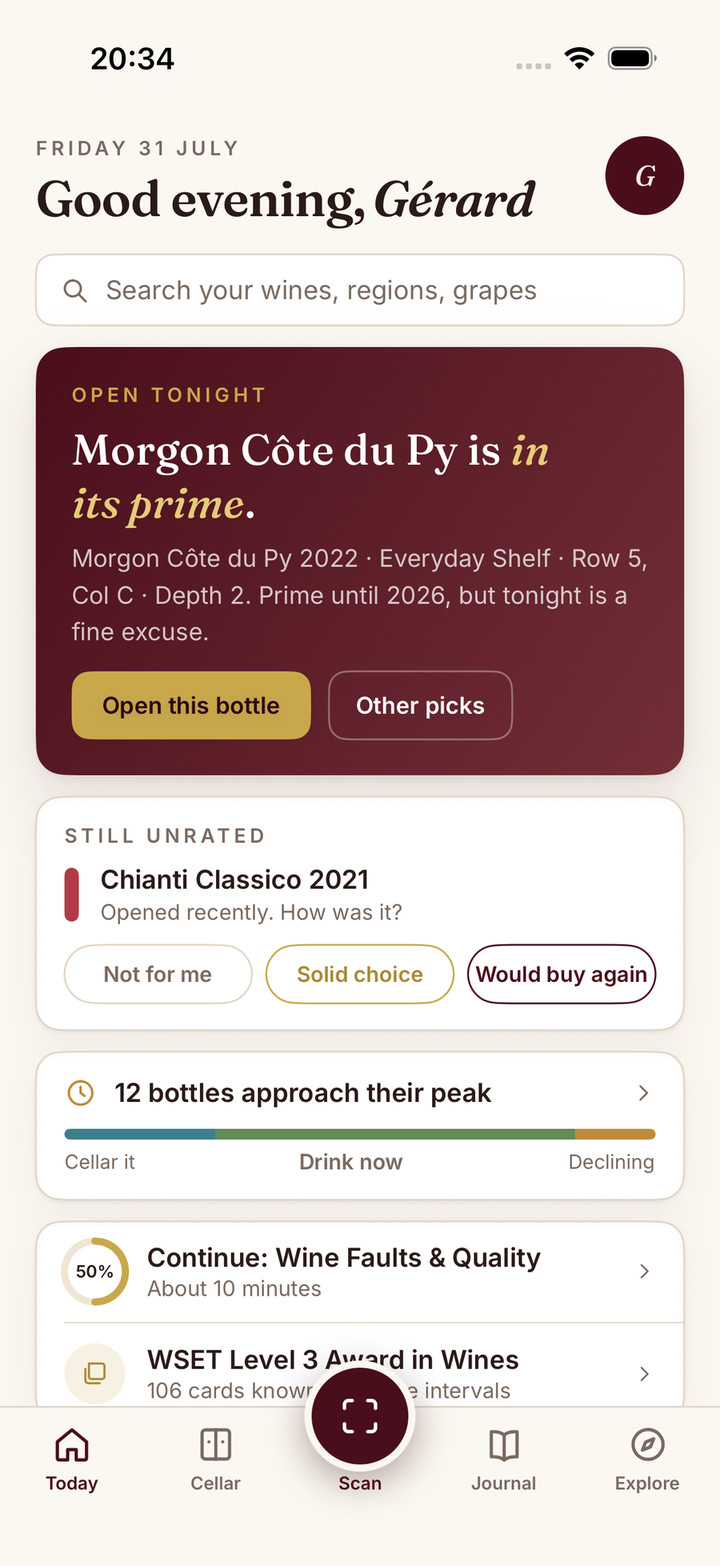
Sommo starts from the syllabus rather than from the card format.
The flashcards run on SM-2, the same algorithm Anki uses, so the scheduling advantage is not something you give up. The difference is that the decks are pre-built for Levels 1 to 4 and checked against the syllabus, so there is no authoring weekend and no auditing somebody else’s errors before you can trust a card.
Then it covers what flashcards structurally cannot. Mock exams are timed and mirror the real format, with explanations after every question. Typed mode lets you write free-text answers that get graded like a WSET examiner would grade them, which is the closest practice available to what Level 3 actually asks of you. Adaptive practice pushes you toward weak areas rather than letting you re-drill comfortable ones, and AI study plans read your quiz scores, flashcard performance, and wrong answers to tell you what to revise next.
Around the exam prep sits the thing neither flashcard app can offer: actual wine. The SAT tasting notes get AI feedback, so tasting practice at home is marked rather than guessed at, and the region map makes the geography stick in a way a card back never does.
Where it does not compete: Anki is free on desktop, infinitely customisable, and works for every subject you will ever study. If you already run an Anki system you love, keep it, and treat this as the exam-format layer it is missing. Quizlet remains the fastest free start for Level 1.
All Three, Side by Side
| Sommo | Anki | Quizlet | |
|---|---|---|---|
| Spaced repetition | SM-2 | SM-2, best in class | Learn mode, less sophisticated |
| Pre-built WSET decks | Levels 1 to 4, syllabus-checked | Community, variable | Community, variable |
| Timed mock exams | Yes, real format | No | No |
| Typed answers graded | Yes, AI-graded like an examiner | No | Text match only |
| Adaptive practice | Yes, targets weak areas | Scheduling only | No |
| AI study plans | Yes | No | No |
| Tasting practice | SAT notes with AI feedback | No | No |
| Works for other subjects | No | Yes, anything | Yes, anything |
| Price | Free Level 1 content; Premium $5/mo or $29.99/yr | Free desktop and Android; $24.99 iOS | Free with ads; Plus $3.33/mo |
The Bottom Line
If you are choosing purely between these two: Quizlet for Level 1, Anki from Level 2 upward, and audit whatever deck you download before you trust a word of it.
But if you are sitting Level 3 in eight weeks, the honest advice is that better flashcards will not fix the problem. The exam tests written explanation and structured tasting under time pressure, and no card-based tool practises either. Add mock exams and marked written answers to whatever you use, from wherever you can get them.
Try Sommo free, or read the wider field in the best WSET revision apps of 2026 and the WSET Level 3 study guide.
Anki or Quizlet for your WSET revision?