Walk into any wine shop in 2026 and the shelf-talkers tell the same story. “Wine Spectator: 92 points.” “Robert Parker: 94 points.” “Decanter: 95 points.” The score is everywhere, plastered on bottles, displayed on price tags, repeated on websites, used to justify markup. And for the wine drinker trying to make a decent decision, the score has become quietly useless. Not because critics are dishonest, but because the system has been gamed, inflated, and stretched so far that a 90-point rating now tells you almost nothing about whether you will enjoy the wine.
This guide is the honest breakdown of how wine scoring works, why the famous 100-point system has lost most of its meaning, where critic scores still hold value, and what to use instead when you are trying to decide whether a bottle is actually worth buying. The goal is not to dismiss the critics. Several of them are excellent. The goal is to help you read scores like the trade reads them, rather than like the supermarket wants you to.
How the 100-Point System Actually Works
The modern wine scoring system was invented by Robert Parker in the 1970s and applied through his publication The Wine Advocate. The original idea was simple. Wines were scored on a 100-point scale, starting at 50 (legally undrinkable) and rising. Anything below 80 was technically flawed. 80 to 89 was acceptable to good. 90 to 95 was outstanding. 96 to 100 was legendary.
In theory, this gave drinkers a precise vocabulary for quality. In practice, two things happened.
Score inflation. Over the next forty years, the average score crept upward. A wine that would have rated 87 in 1985 now routinely gets 91. The pressure on critics to be generous comes from multiple directions: producers complain about low scores, wine shops want shelf-talker numbers, publications need access to sample bottles. The result is a system where a 90-point rating means “average,” not “outstanding.”
Score collapse. Most published scores now fall in a narrow band between 88 and 95. Wines below 88 are usually not reviewed at all (the publication chose not to publish a low score). Wines above 95 are reserved for a tiny elite. The vast majority of wines you encounter sit inside the 88 to 95 window, which means the system has barely any signal left.
A modern 90 is not a recommendation. It is a baseline.
What Critics Actually Score
Wine critics evaluate four broad areas: appearance, aroma, structural balance, and finish, the same ground a WSET Level 2 tasting sheet covers. The scoring is technical and trained, and the best critics are reliable within their own framework. A wine they call 92 will usually have specific qualities you can verify.
But the framework has limits.
It is calibrated to a single palate. A critic’s score reflects how the wine performs against their personal calibration. The most famous critics tend to favour wines with concentration, power, and oak influence, which means lighter, more elegant styles often score lower than they deserve.
It collapses dozens of variables into one number. A wine might score 92 because it is technically excellent in every category, or because it is brilliant in one area and average in others. The score does not tell you which.
It assumes optimal drinking conditions. Critics taste in controlled settings, often immediately after bottling, often with comparative tastings of similar wines. The wine you open at home, three years later, with food, in your kitchen, is not the wine that got the score.
It is rarely updated. Most scores are issued at release and never revised. A wine that needed ten years to show its quality might have received a 90 at three years and 96 at thirteen years. The published score never updates.
The Five Reasons a 90 Score Disappoints
Here are the specific ways the 90-point trap actually catches wine drinkers.
1. Inflation Means 90 Is Average
Industry analysis of the major publications shows that the average published score is now between 89 and 91 across most well-known critics. A 90-point rating is functionally “normal.” Calling it outstanding is misleading. The wines that genuinely overdeliver are scoring 93 and higher, and those scores remain rare.
2. The Wine Was Tasted Before It Was Ready
Many high-end wines need years to evolve. Critics often taste them at release or before, when the tannins are tight and the wine is closed. The critic gives an “anticipated” score, which is often lower than the wine will eventually deserve. You buy the wine on the score, open it five years later, and it has moved either up or down from the rating.
3. The Wine Was Tasted on Its Best Day
The reverse problem. Critics taste a sample bottle, which has been opened, decanted, served with care, and presented under ideal conditions. Your bottle, from a different shipment, stored in a hot retailer for a year, opened straight from the rack, will not match that experience.
4. The Critic’s Palate Is Not Your Palate
If your favourite wine style is light, mineral Pinot Noir, a critic who favours concentrated Cabernet Sauvignon will score those wines higher. You buy a 94-point Cabernet on their recommendation, find it overwhelming, and conclude you do not understand wine. The truth is the scoring system never accounted for your preferences.
5. The Score Drives the Price, Not the Quality
Once a wine receives a high score, its price typically rises. A 93-point Cabernet at $40 might double to $80 the year after the rating publishes. You pay the post-score price for the same liquid that would have been a relative bargain six months earlier.
When Critic Scores Are Still Useful
Critic scores are not worthless. They are useful in specific cases.
For wines you are unfamiliar with, from regions you do not know well. If you are buying a Hungarian dry Furmint or a Slovenian Rebula for the first time, a high score from a serious critic is a reasonable signal of quality.
For age-worthy wines you are buying to cellar. When you are committing to a $80 bottle that you will open in ten years, the consensus of multiple serious critics on whether the wine will age is a useful filter.
For finding wines from new vintages. A vintage report from Wine Spectator, Vinous, or Decanter gives you a useful overview of what is worth buying from the year’s releases.
For verifying producers you are unsure about. If a producer has consistently scored above 90 from multiple sources for ten years, the producer is doing something right. The score does not tell you whether you will love the wine, but it tells you the producer is competent.
The common thread: scores are most useful as filters at the buying stage, less useful as drinkers’ guides at the consumption stage.
Which Critics Are Worth Reading
If you are going to follow critics at all, the trade does take some sources more seriously than others. A practical hierarchy.
Most trusted:
- Jancis Robinson (jancisrobinson.com). British, MW-credentialled, palate favours elegance and balance. Reliable across regions, particularly strong on European wines. Uses a 20-point scale (her own preference), which is less subject to inflation.
- Antonio Galloni and Vinous (vinous.com). Founded by a former Parker writer who became more independent. Strong on Burgundy, Italian wines, and Champagne. Consistent and detailed.
- William Kelley (currently Wine Advocate, may move). Excellent on Burgundy and Bordeaux. Restrained palate, scores tend not to inflate as much as colleagues'.
- Decanter Magazine. UK-based, panel-driven, generally more conservative on scores than American publications. Strong on European wines.
- The Real Review (Australia/NZ). Excellent on Antipodean wines, with a panel that includes serious palates.
Mixed reputation:
- Wine Spectator. Broad coverage, professional, but heavily influenced by US wine industry economics. Useful for tracking what is being released; less useful for finding hidden value.
- James Suckling. Prolific, popular, scores trend high. Useful for headlines, less useful for distinguishing greatness from merely good.
Take with caution:
- Wine Advocate (under current management). The publication Robert Parker founded has changed hands and styles multiple times. Quality varies by writer. Read individual reviewers, not the brand.
- Wine Enthusiast. Trade publication with substantial advertising relationships with producers. Scores reflect this.
What to Use Instead of Scores
If you are not going to lean on scores, what should you use?
1. Producer Reputation
The single most reliable signal in wine is the producer’s track record. A serious producer with 30 years of consistent quality across vintages is far more reliable than a high-scoring wine from an unfamiliar estate. Build a mental list of producers you trust, by region. Buy from them when you find their bottles, regardless of score.
2. Vintage Reports
For a specific region in a specific year, the vintage report from a reliable critic or trade source tells you more than individual wine scores. A “very good” vintage in Burgundy is a strong signal that any decent producer in that region made decent wine. A “challenging” vintage is a flag.
3. Wine Shop Recommendations (From Serious Shops)
A wine shop owner or buyer who has tasted hundreds of wines and knows what you like is more useful than any critic score. The relationship is the value. Build a relationship with one or two serious wine shops, and their recommendations will beat any published score.
4. Trusted Friends
If you have a wine-drinking friend with similar taste, their recommendations are gold. Personal palate similarity is a stronger predictor of enjoyment than any objective score.
5. Your Own Logged Data
This is the biggest one. If you log every wine you drink, your own ratings, and your own tasting notes, you eventually build a personal database of what you like. The patterns that emerge are infinitely more useful than someone else’s scores. Sharpening that palate deliberately, with the free blind tasting trainer, speeds the process up.
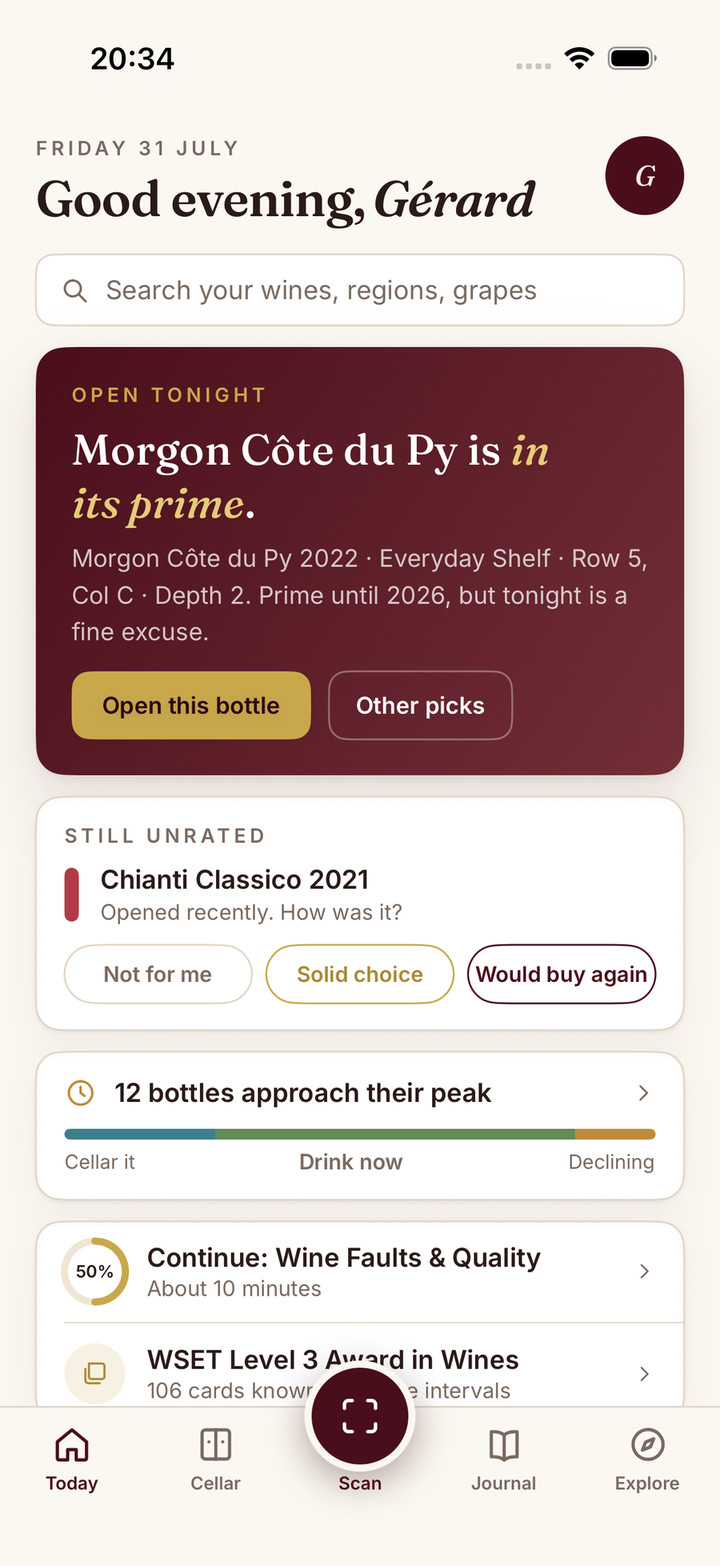
Sommo’s Wine Character Analysis is built around this principle. After 30 or 40 logged wines, the AI reads your ratings and notes and produces a personality profile that beats any generic critic score for predicting what you will actually enjoy. See our wine personality piece for more.
How to Read a Shelf-Talker
The next time you see a 91-point score on a shelf-talker, here is how to read it.
Check the source. Is it Jancis Robinson, Vinous, or Decanter? Or is it a publication you have never heard of? Generic scores from obscure publications are worth zero.
Check the vintage. Is the score for this vintage, or for a previous one that is now sold out? Score-bait labels often quote a score from a different vintage with similar branding.
Check the date. Was the score published when the wine was released, or much later? A score from 15 years ago for a wine being sold today is meaningless.
Check whether the producer is reliable. A high score from a great producer is more believable than a high score from a producer with no track record. If you have not heard of the producer, search for them outside the score.
Check the price. If the wine is priced significantly above similar bottles in the same category, the score is probably doing the heavy lifting in the markup. Look at the price-to-score ratio more than the score alone.
A Specific Example
Two wines on the same shelf.
Wine A: A Spanish Garnacha from Aragón, $14, no score on the shelf-talker. Producer name unfamiliar.
Wine B: A Spanish Garnacha from Aragón, $24, 91-point shelf score from “Wine Critic Monthly,” producer name unfamiliar.
Most shoppers will buy Wine B. The score signals quality, the higher price reinforces the impression.
In reality, both wines are probably similar. The $10 difference reflects the score’s effect on retail pricing, not necessarily a difference in liquid quality. The smart move is to ask the shop staff which they would actually drink, or to scan both bottles in an app and read producer reviews from drinkers with similar palates to yours.
What the Wine Trade Knows That You Don’t
A few honest observations from the industry.
Most retail buyers care about scores because customers care about scores. Many serious wine shops privately roll their eyes at the 90-point system but stock accordingly because shoppers expect it.
Most great producers do not advertise their scores. First-growth Bordeaux, Grand Cru Burgundy, top Italian producers like Conterno or Soldera rarely emphasise critic scores. They do not need to.
The wines with the largest score-driven markups are often the most disappointing. When a wine that previously sold for $30 jumps to $60 after a high score, the buyer is usually paying for the score rather than for a better wine.
Score inflation continues every year. A 90 from 2026 is not the same as a 90 from 2016, which was not the same as a 90 from 2006. The scale has drifted.
A Practical Wine-Buying Workflow Without Scores
If you abandon scores entirely, here is a workflow that genuinely works.
- Identify the region and grape you want. Use guides, classes, or your own preferences.
- Look up a few trusted producers in that region. Use Jancis Robinson’s free producer profiles, regional wine bodies, or your wine shop’s recommendations.
- Walk into a serious wine shop with the producer names. Ask which producers they have, what vintages, and which the buyer personally recommends.
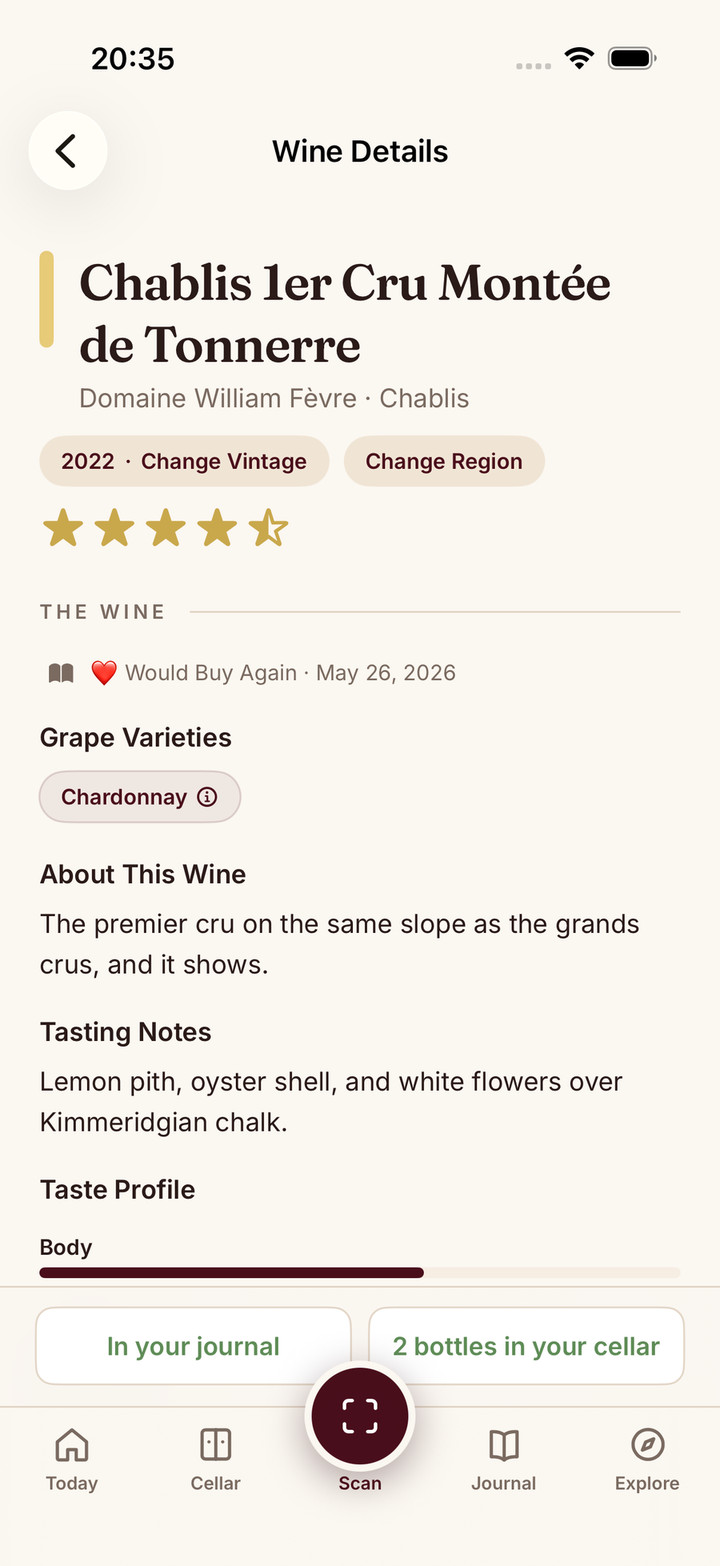
- Verify the producer in an app. Scan the bottle in Sommo or another wine app and read what drinkers with palates similar to yours have written.
- Buy one or two bottles. Drink them with food. Rate them honestly. Note what you liked and what you did not.
- Repeat. After 50 bottles, your own preferences will tell you more than any score ever could.
Explore with Sommo
The biggest enemy of useful wine scoring is the absence of a personal record. Sommo gives you the alternative: every wine you scan and rate feeds your own personal scoring system, calibrated to your palate, your preferences, and your evolution as a drinker. After enough wines logged, the recommendations you get from your own data will outperform any generic 90-point shelf-talker by a wide margin.
Download Sommo free and build the only score that actually predicts what you will love.